Launch offer — valid today only

📄 Digital book in PDF · read it on your phone or print it

Bucket Truck Tree Work and the ISA Aerial Lift Exam in Drawings: the Whole Job in 7 Steps, Same Order Every Time One Topic on Every Page

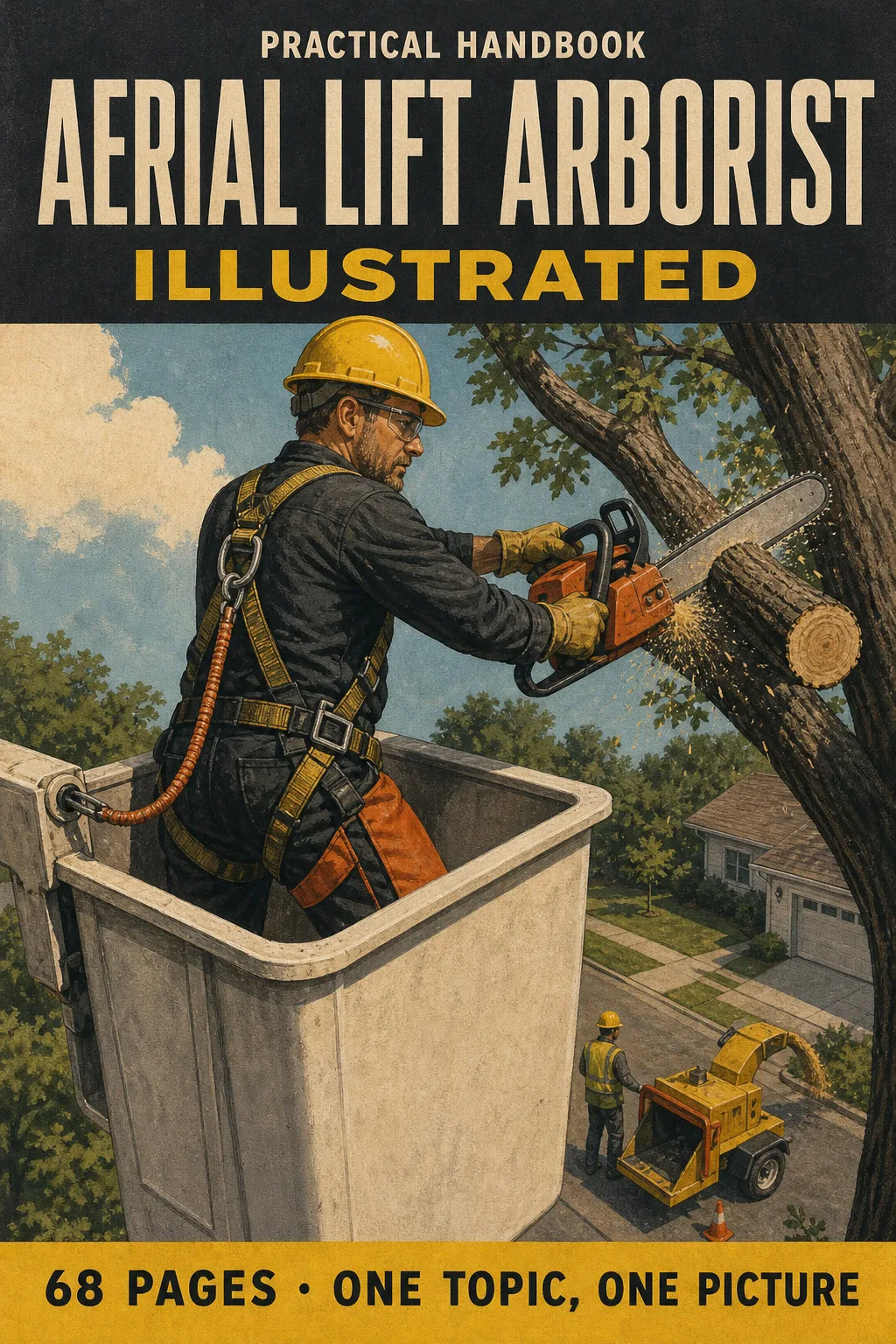
Pre-use inspection, outriggers and cribbing, the 10-foot rule, the MAD table, harness and anchor, the three-cut method, the drop zone, emergency lowering and aerial rescue. Every topic gets its own page: the drawing first, then what you need to remember. 68 illustrated pages.

YES, I WANT THE BOOK + 2 BONUS BOOKS

🔒 Secure checkout · PDF by email · 30-day guarantee

Every topic, its own pageEach rule and each step drawn, with the explanation right beside it
68 illustrated pages9 parts that follow the job in 7 steps: arrive, inspect, set up, go up, cut, lower, stow
Up-to-date sourcesANSI Z133, OSHA 1910.67, 1910.269 and 1910.333, MUTCD Part 6
PDF by emailFormat

Look Inside the Book

Every page has one big drawing and a box with the distances, checks and steps you need to know:

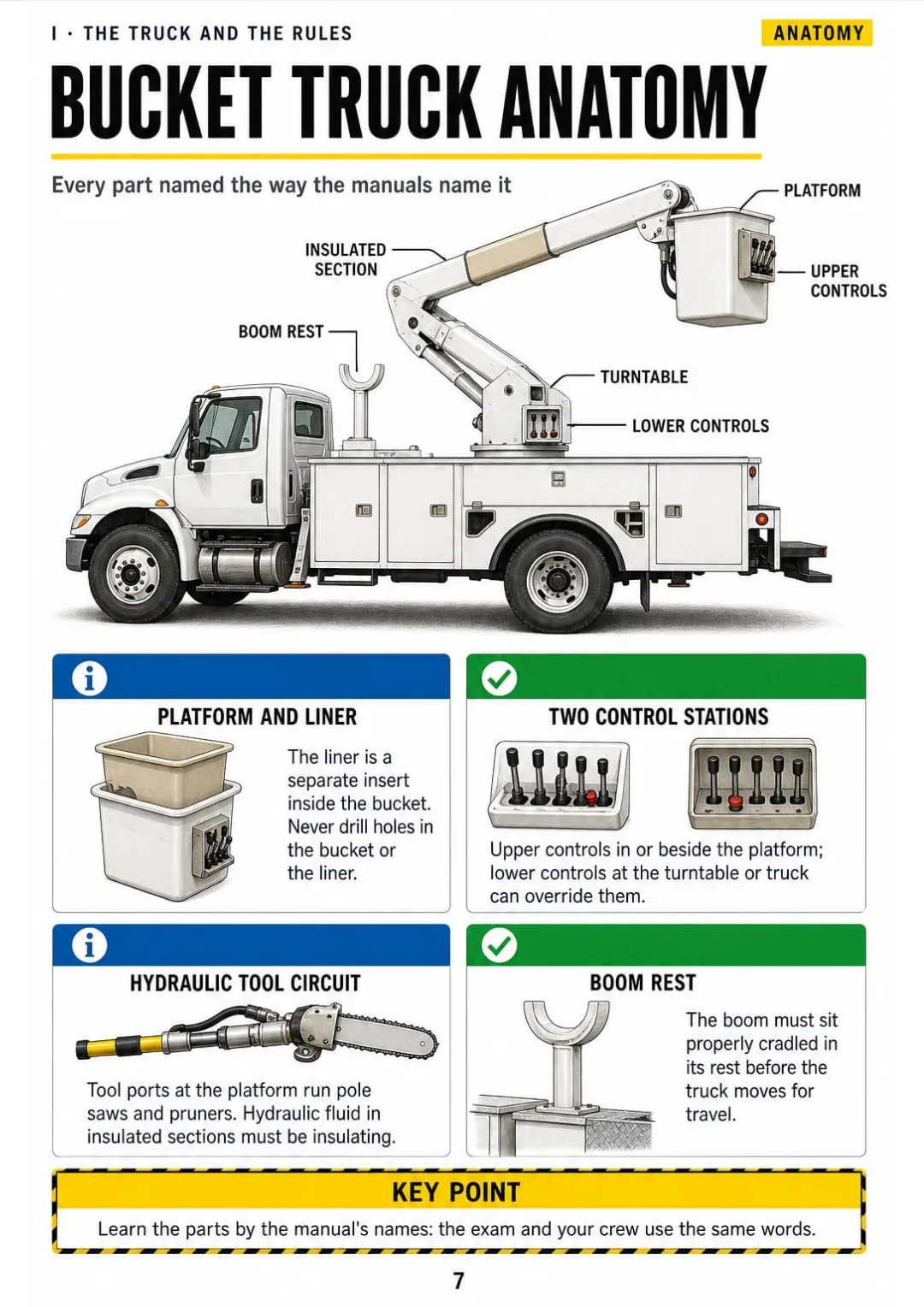
Turntable, insulated section, platform, both controls and boom rest, labeled.
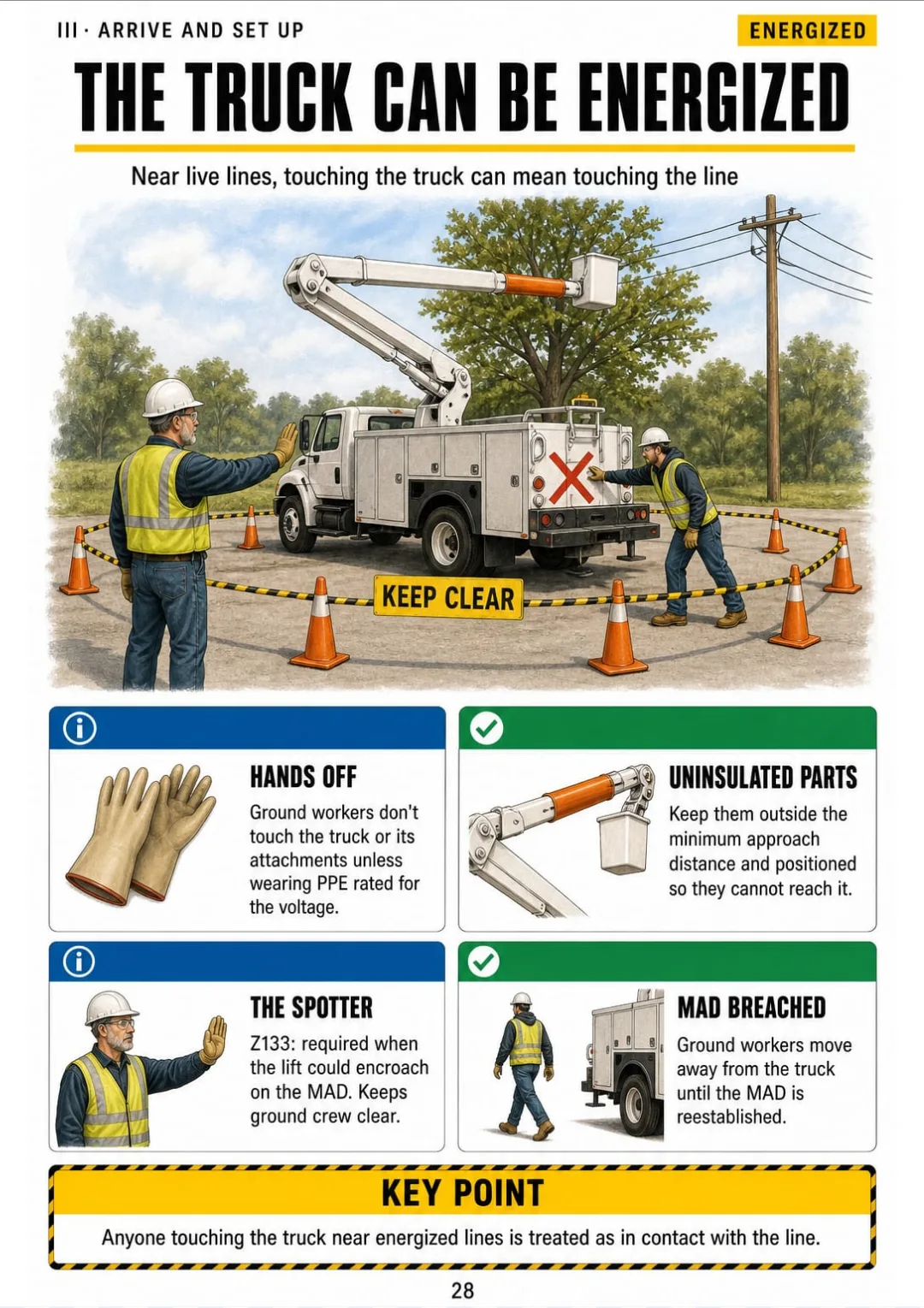
OSHA 1910.333(c)(3)(iii)(B): no ground contact with the truck near energized lines without rated PPE
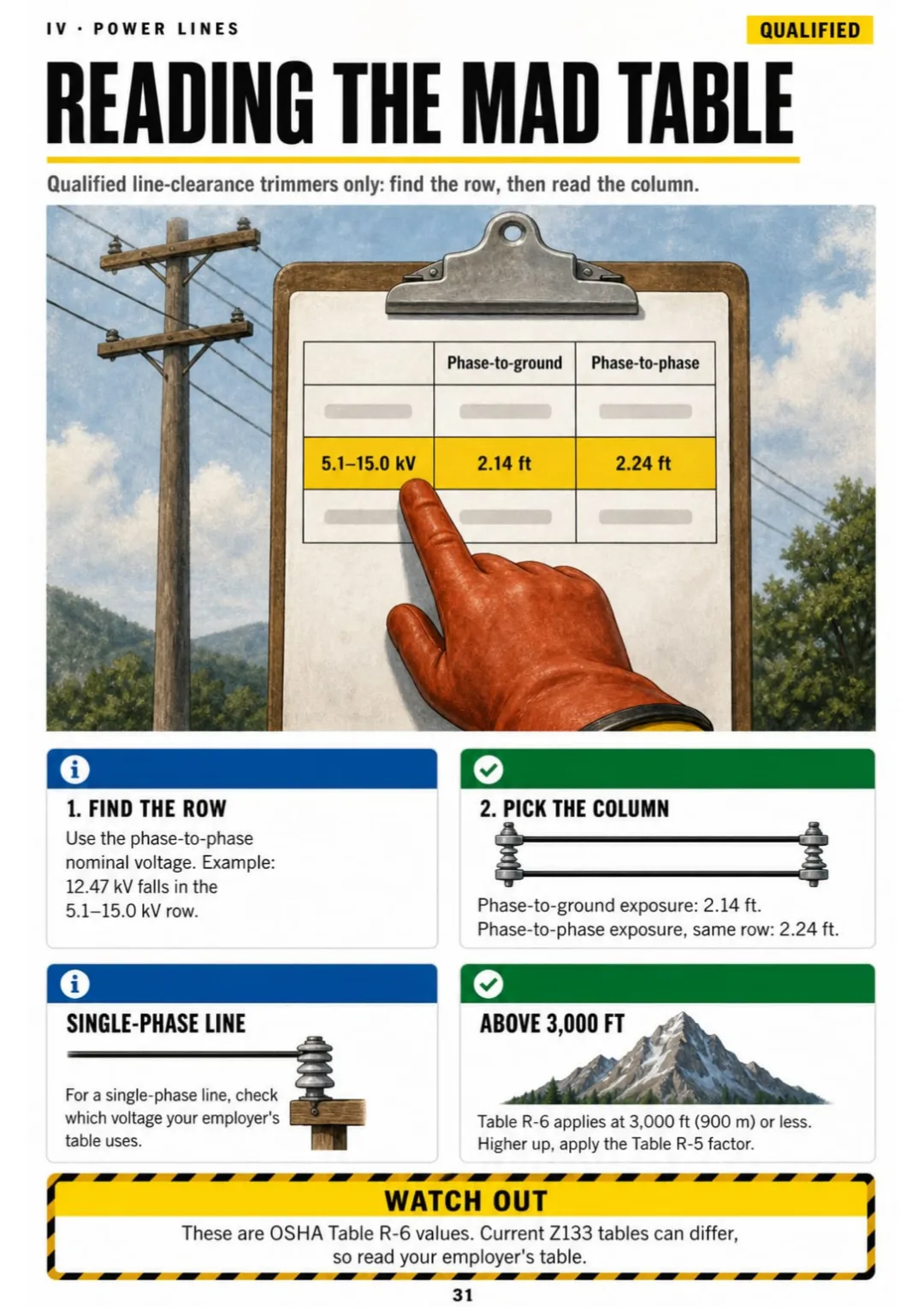
OSHA Table R-6: 5.1–15.0 kV gives 2.14 ft phase-to-ground, for qualified trimmers only.
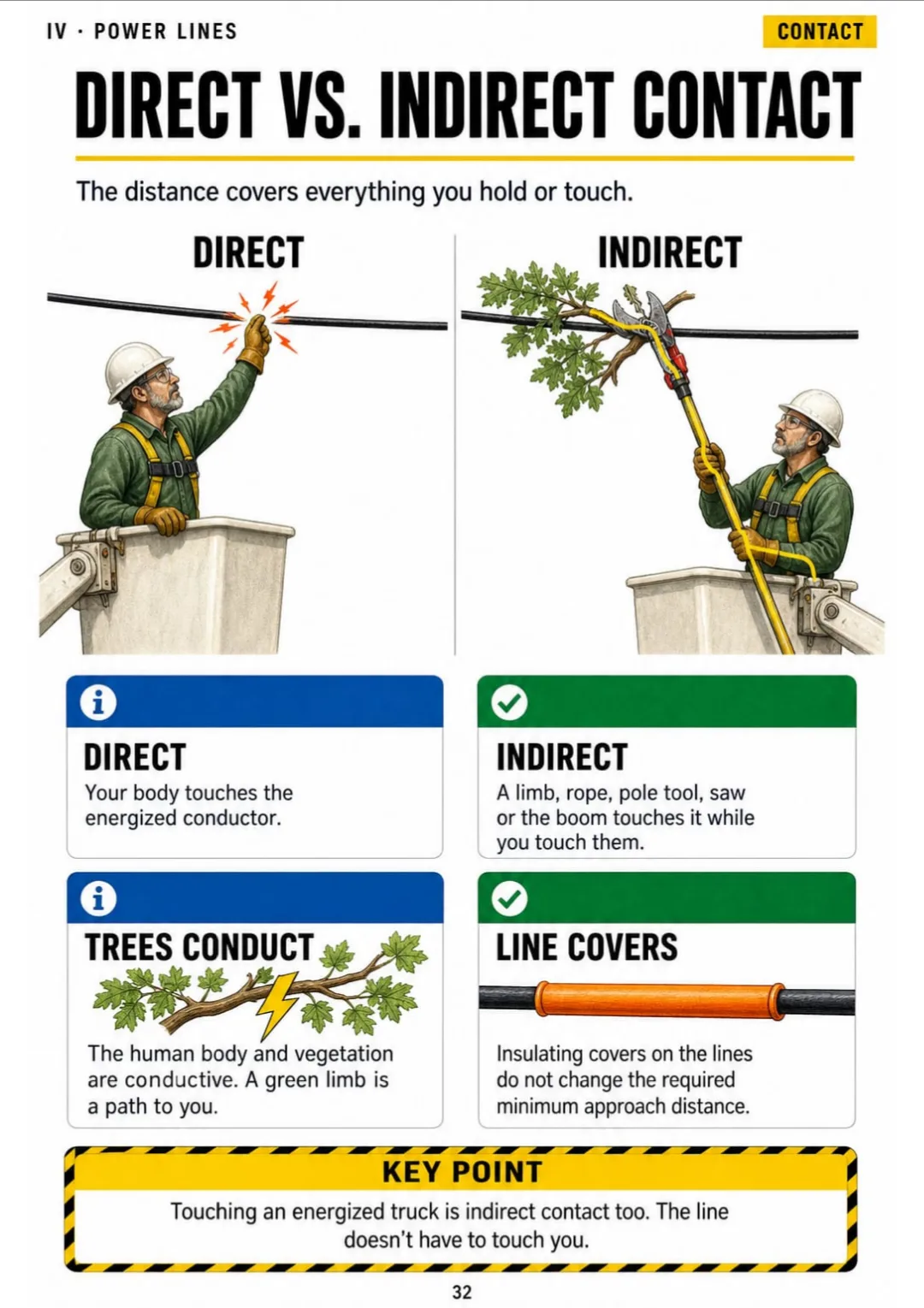
Indirect contact: a limb, rope or pole tool touches the line while you hold it.
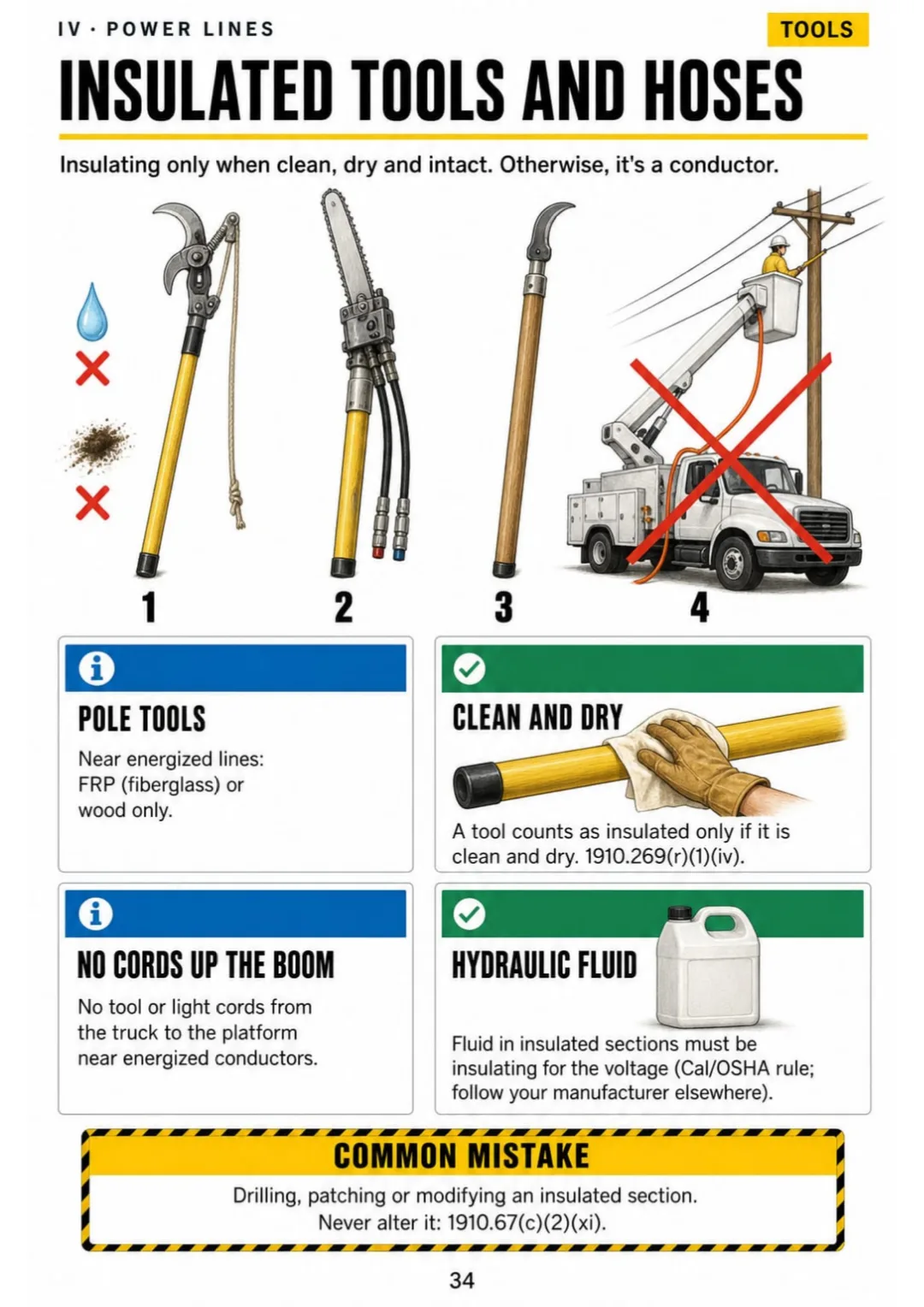
Pole tools near lines: fiberglass or wood, and only when clean and dry.
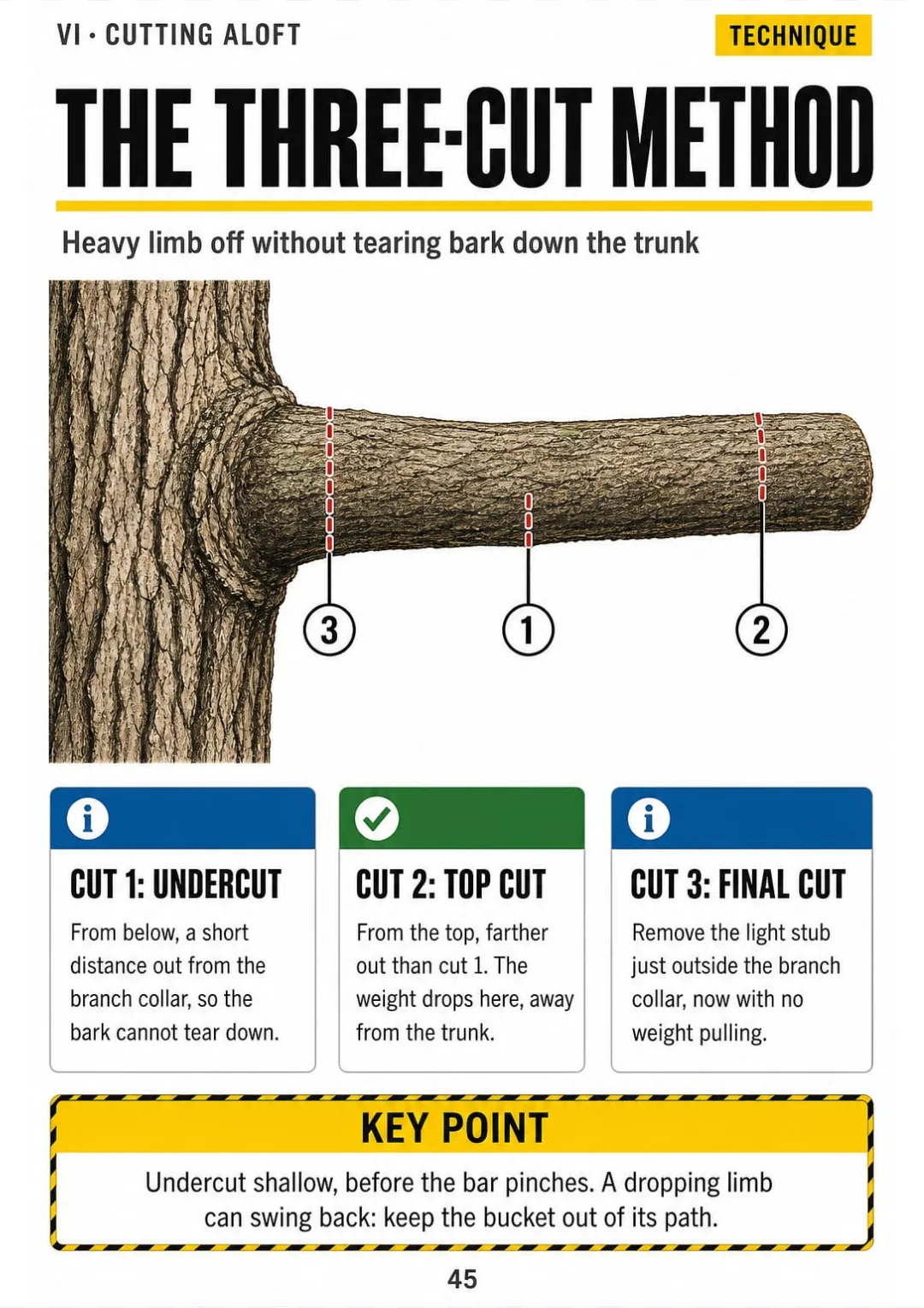
Undercut, top cut farther out, final cut at the collar: three numbered cuts on one limb.
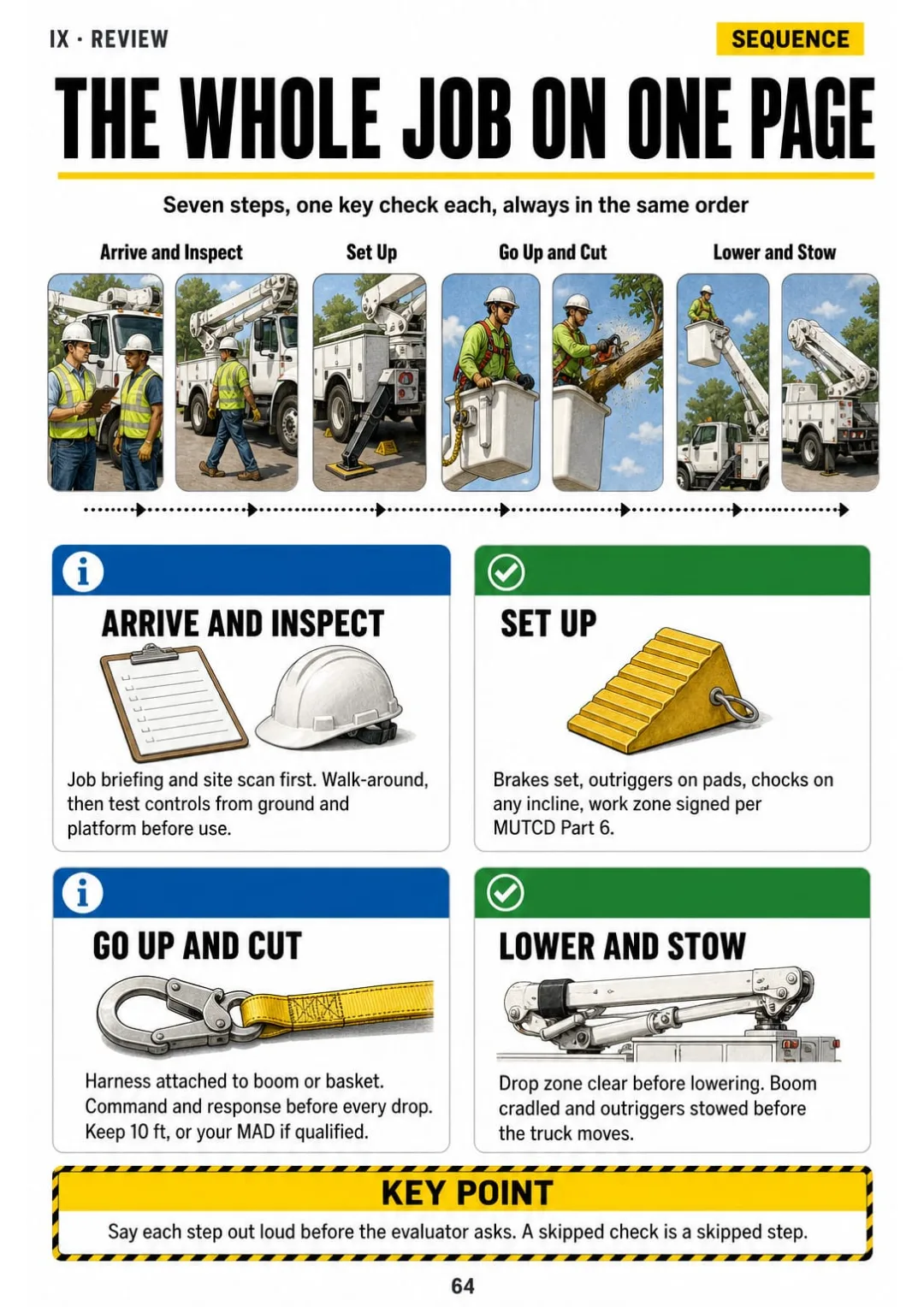
Arrive, inspect, set up, go up, cut, lower, stow: one check per step.
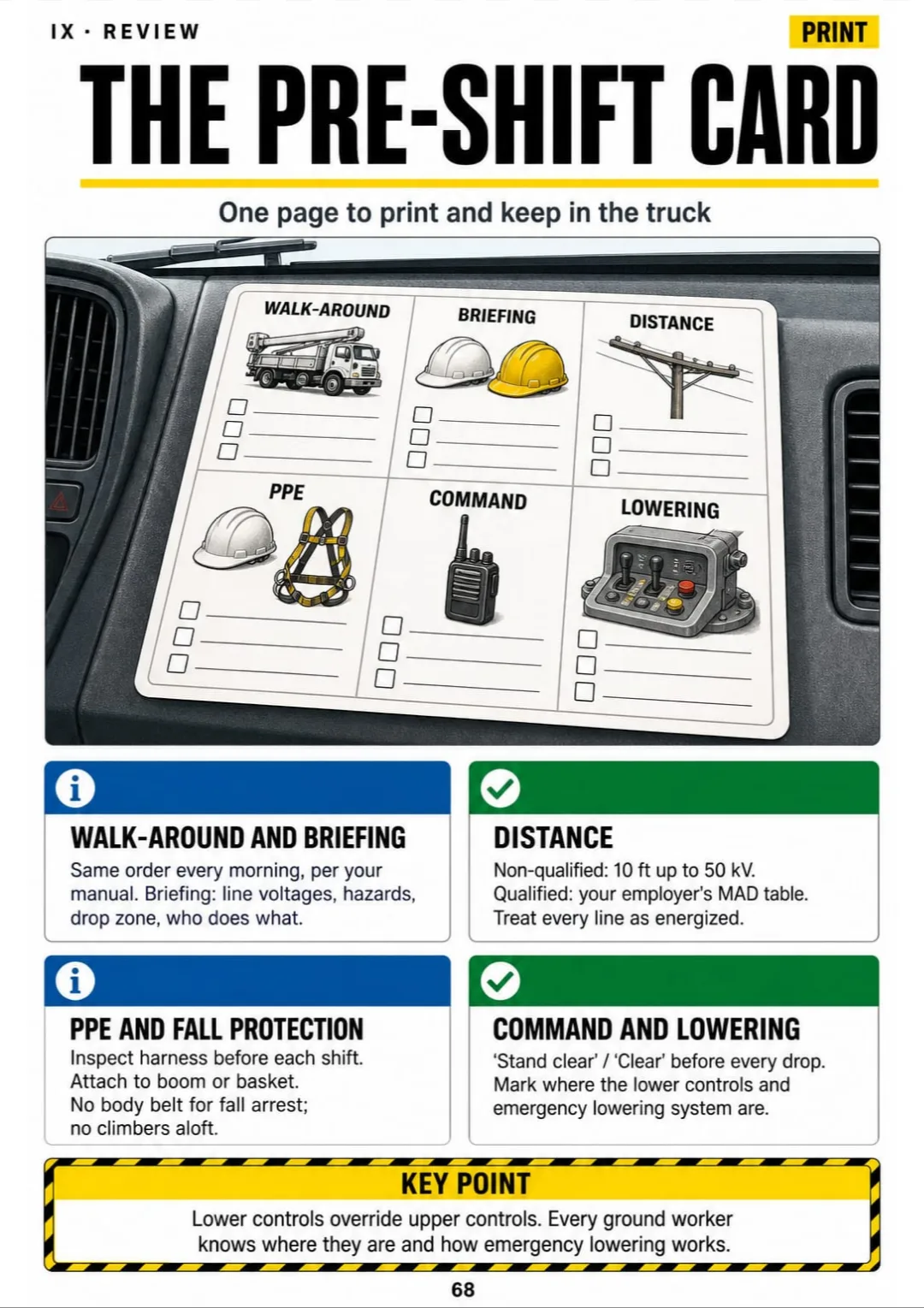
Walk-around, briefing, distance, PPE, command and response, lowering key: one card.

Swipe to see more →

These are real pages from the book. The table of contents is the full one: 9 parts and 64 topics.

The Problem Isn't You. It's How They Explained It.

You're setting up under a 100 kV line and the crew leader asks: “You're not line-clearance qualified. How close can you take the bucket?” You know there's a number, and it won't come.

You did read it. But in OSHA it's a paragraph: 10 feet, then “plus 4 inches for every 10 kV over 50 kV,” then phase-to-ground, then a different table for qualified workers. In paragraphs, the numbers blur together.

OSHA Table R-6: 5.1–15.0 kV gives 2.14 ft phase-to-ground, for qualified trimmers only.

In the book, the 10-foot rule is one page: the line, the bucket and the distance drawn between them. Beside it, a box: 10 ft up to 50 kV, plus 4 in per 10 kV over. At 100 kV, 11 ft 8 in, worked out on the page.

Same with the pre-use walk-around, outriggers and cribbing, the MAD table for qualified trimmers, the three-cut method and emergency lowering: each one has its own page.

Next time someone asks, you picture the page and say the number. You know it, and you do it in the same order every time.

COMPARE FOR YOURSELF

The Same Topic, Two Ways to Study It

THIS
  • The manual: line after line
  • Work zones and tapers explained only in words
  • You show up to the exam with doubts
Pursuant to Part 6 of the MUTCD, a temporary traffic control zone shall be understood as comprising four distinct areas, namely the advance warning area, the transition area, the activity area and the termination area. The transition area, wherein road users are redirected out of their normal path, typically incorporates a taper, the length of which is determined as a function of lane width and posted speed; for speeds of 40 mph or less, L = WS²/60, whereas a different formula applies at higher speeds. The activity area is further subdivided into work space, traffic space and buffer space.
FOR THIS
  • The work zone in one drawing
  • The four areas named right on the drawing
  • 35 mph, 12-ft lane: 245 ft of taper, worked out
OSHA 1910.333(c)(3)(iii)(B): no ground contact with the truck near energized lines without rated PPE
CONTENTS

Take a Look at the 9 Parts and 64 Topics

The truck and the rules, pre-use inspection, setup, power lines, fall protection, cutting, rigging, emergencies and test prep: 68 pages, all illustrated.

IThe Truck and the Rules · pp. 5-12
  1. The Job in Order: Arrive, Inspect, Set Up, Go Up, Cut, Lower, Stow
  2. Which Rule Covers What
  3. Bucket Truck Anatomy
  4. Insulated vs. Non-Insulated Aerial Devices
  5. Upper Controls vs. Lower Controls
  6. Rated Capacity: What Counts in the Bucket
  7. Qualified vs. Non-Qualified Line-Clearance Arborist
  8. Who Does What on the Crew
IIPre-Use Inspection · pp. 13-20
  1. The Walk-Around in the Same Order Every Morning
  2. Hydraulics: Leaks, Hoses and Fluid Level
  3. Booms, Pins and Welds
  4. Fiberglass: Clean, Dry, No Cracks
  5. Function Test from the Ground and the Platform
  6. The Platform and Its Liner
  7. Truck Checks: Tires, Brakes, Lights, PTO
  8. Records, Periodic Tests and Tag-Out
IIIArrive and Set Up · pp. 21-28
  1. The Job Briefing Before Anyone Goes Up
  2. Scanning the Site: Overhead, Ground, Slope
  3. Work Zone and Traffic: The Four MUTCD Areas
  4. Positioning the Truck
  5. Brakes and Wheel Chocks
  6. Outriggers, Pads and Cribbing
  7. Level and Slope: The Manufacturer Decides
  8. Line Clearance Setup: The Truck as an Electrical Hazard
IVPower Lines · pp. 29-36
  1. Every Conductor Is Energized Until Proven Otherwise
  2. The 10-Foot Rule for Non-Qualified Workers
  3. Reading the Minimum Approach Distance Table
  4. Direct vs. Indirect Contact
  5. Step and Touch Potential
  6. Insulated Tools and Hydraulic Hoses
  7. Keeping Limbs Out of the Lines
  8. If the Boom Contacts a Line
VGoing Up: PPE and Fall Protection · pp. 37-43
  1. PPE from Head to Boots
  2. Harness, Lanyard and the Right Anchor
  3. What You Never Do in the Bucket
  4. Moving the Boom Safely
  5. Command and Response
  6. Weather: Storms, Wind and Ice
  7. The Saw in the Bucket
VICutting from the Bucket · pp. 44-50
  1. Where to Put the Bucket Before the Cut
  2. The Three-Cut Method for Heavy Limbs
  3. The Pruning Cut at the Branch Collar
  4. Top-Handle Saws Aloft
  5. Hydraulic Pole Saws and Pruners
  6. Chunking Down: Piece Size and Capacity
  7. Kickback and Reactive Forces Aloft
VIIRigging and the Ground Crew · pp. 51-57
  1. The Drop Zone
  2. Rigging Point: In the Tree, Not on the Boom
  3. Block, Sling and Rope: Working Load Limits
  4. The Friction Device on the Ground
  5. Butt-Tie vs. Tip-Tie
  6. Tag Lines to Steer the Piece
  7. Shock Loading: Let It Run
VIIIEmergencies and Rescue · pp. 58-63
  1. The Emergency Plan Before the Emergency
  2. Emergency Lowering
  3. Aerial Rescue in Order
  4. An Electrical Contact Victim
  5. Stuck Aloft: Hydraulic Failure
  6. Stow and Leave
IXReview and Test Prep · pp. 64-68
  1. The Whole Job on One Page
  2. The Numbers to Have at Hand
  3. The Most Frequent Setup and Cutting Errors
  4. How to Read Written Exam Questions
  5. The Pre-Shift Card

One Page, One Topic, All Clear

Picture your skills test.

The evaluator stands by the truck and says, “Walk me through your setup.” Chocks, outriggers, pads, cribbing: in what order?

You studied it on the outriggers page: the truck drawn from above, wheel chocks in place, each outrigger down on its pad, cribbing under soft ground. So you say it in that order, chocks first.

Pole tools near lines: fiberglass or wood, and only when clean and dry.

Same with the pre-use walk-around, the MAD table, harness and anchor point, the three-cut method and the drop zone: each one on its own page.

Aerial Lift Arborist Illustrated is 68 illustrated pages in 9 parts, one topic per page, and at the end a review part with the whole job on one page, the numbers to have at hand and the pre-shift card.

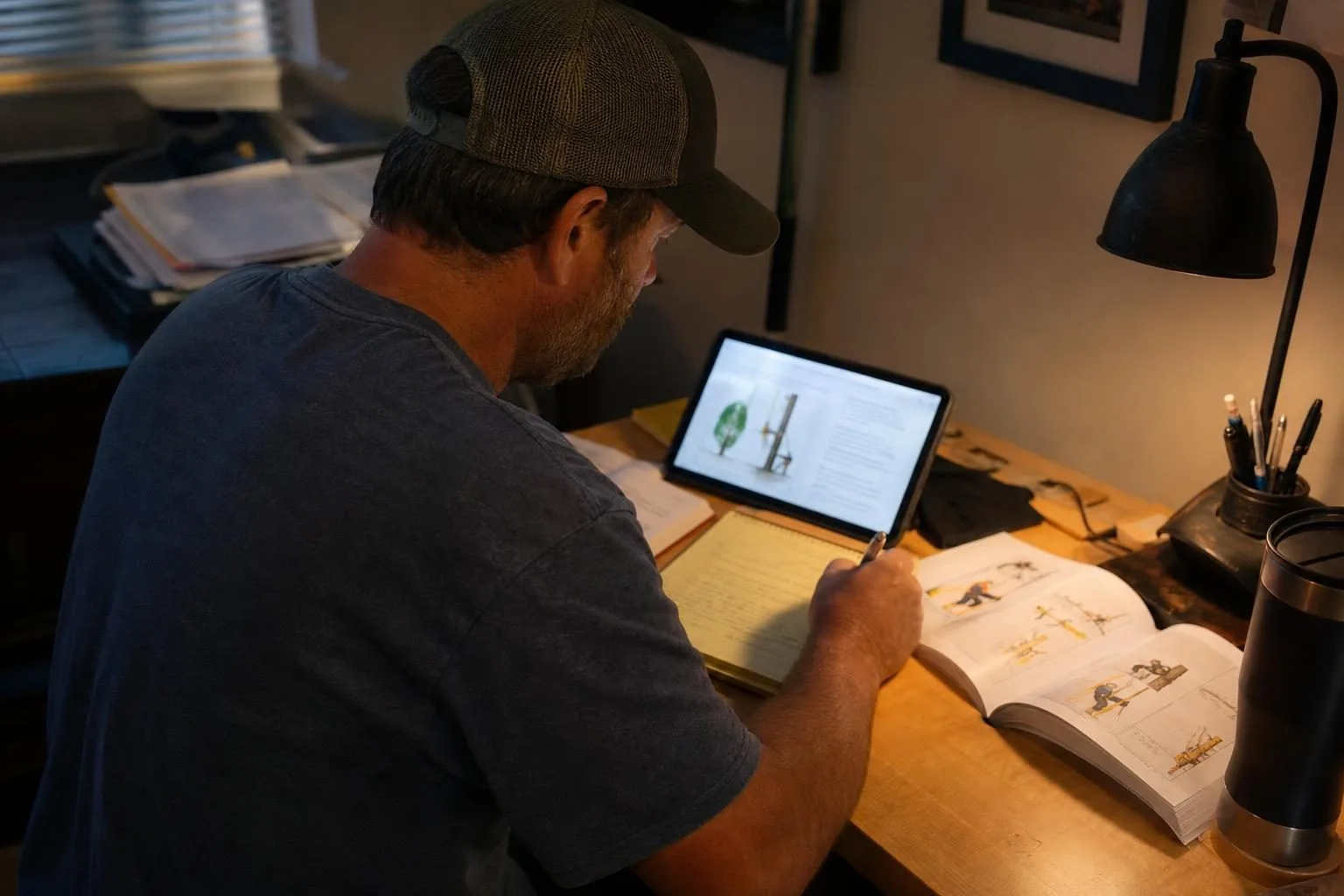
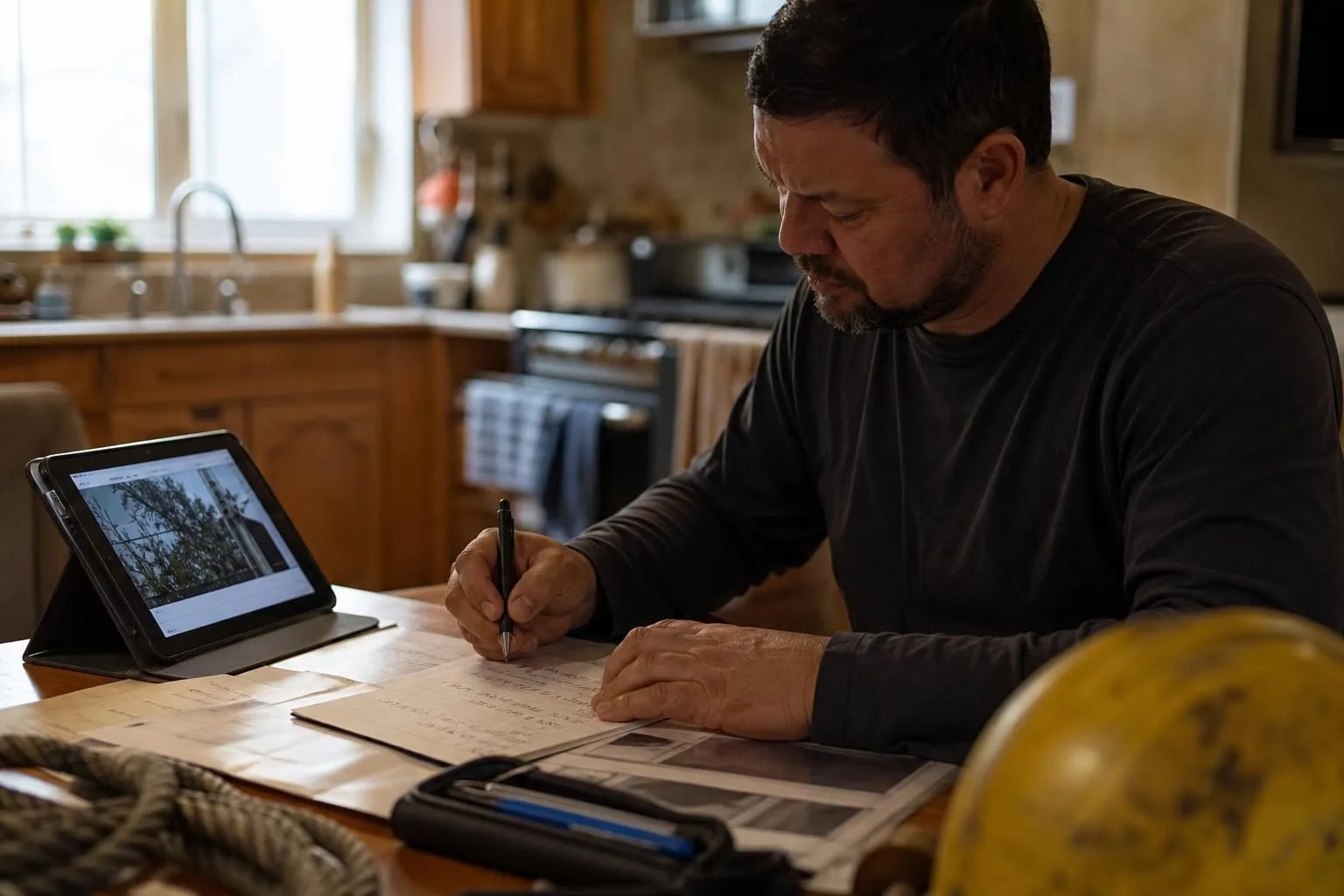
What you see drawn, you don't have to memorize.

What's Inside Aerial Lift Arborist Illustrated:

Ipp. 5-12

The Truck and the Rules

The job in order, which rule covers what, bucket truck anatomy, insulated vs. non-insulated, upper and lower controls, rated capacity, qualified vs. non-qualified and who does what on the crew.

IIpp. 13-20

Pre-Use Inspection

Nothing gets skipped before going up: the walk-around in the same order every morning, hydraulics, booms, pins and welds, fiberglass, function tests, the platform and liner, truck checks, records and tag-out.

IIIpp. 21-28

Arrive and Set Up

The job briefing, scanning the site, the four MUTCD work zone areas, positioning, brakes and chocks, outriggers and cribbing, slope limits and line clearance setup.

IVpp. 29-36

Power Lines

You say the distance without guessing: every conductor treated as energized, the 10-foot rule worked out, the MAD table, direct vs. indirect contact, step and touch potential, insulated tools, keeping limbs clear and what to do after contact.

Vpp. 37-43

Going Up: PPE and Fall Protection

PPE from head to boots, harness, lanyard and anchor, what you never do in the bucket, moving the boom, command and response, weather and the saw aloft.

VIpp. 44-50

Cutting from the Bucket

Where to put the bucket, the three-cut method, the cut at the branch collar, top-handle saws, hydraulic pole saws, chunking down and kickback aloft.

VIIpp. 51-57

Rigging and the Ground Crew

The drop zone, the rigging point in the tree, working load limits, the friction device, butt-tie vs. tip-tie, tag lines and shock loading.

VIIIpp. 58-63

Emergencies and Rescue

The emergency plan, emergency lowering, aerial rescue in order, an electrical contact victim, hydraulic failure aloft, and stowing to leave.

IXpp. 64-68

Review and Test Prep

The whole job on one page, the numbers to have at hand, the most frequent setup and cutting errors, reading written exam questions and the pre-shift card.

At the end of the book: A review part with the whole job on one page, the numbers to have at hand and a printable pre-shift card.
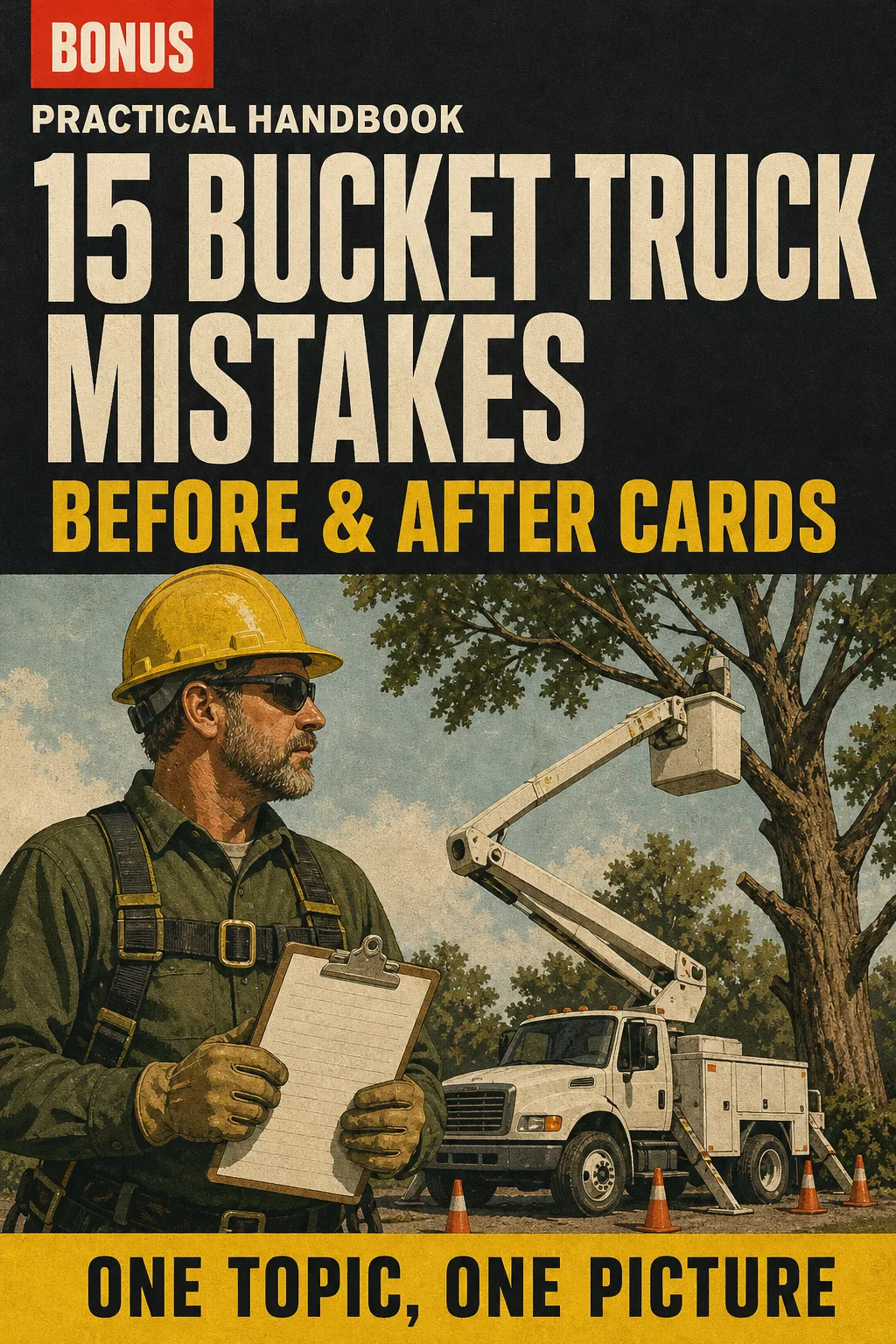
Plus: 2 Free Books

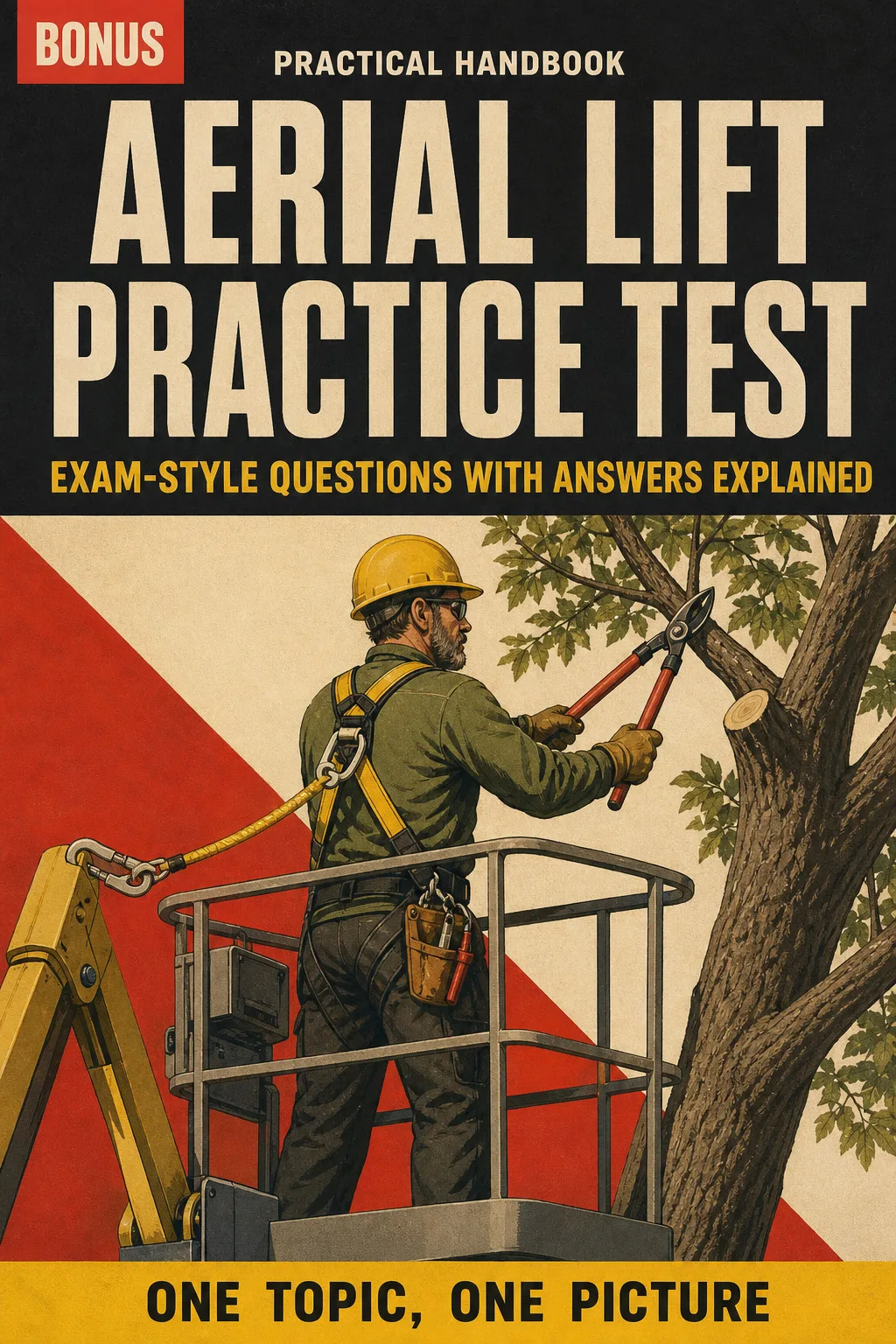
Aerial Lift Practice Test: Exam-Style Questions with Answers Explained

BONUS 1: «Aerial Lift Practice Test: Exam-Style Questions with Answers Explained»

Value on its own: US$ 17.90

Test yourself on inspection, setup, approach distances, rigging and rescue, and see why each answer is right before the real written exam.

15 Bucket Truck Mistakes: Before & After Cards

BONUS 2: «15 Bucket Truck Mistakes: Before & After Cards»

Value on its own: US$ 14.90

The most common setup, cutting and rigging errors drawn side by side with the right way, so you spot them on the job and in the skills test.

Aerial Lift Arborist Illustrated with 2 Free Books

  • Aerial Lift Arborist Illustrated: 68 illustrated pagesUS$ 63
  • BONUS 1: Aerial Lift Practice Test: Exam-Style Questions with Answers ExplainedUS$ 17.90
  • BONUS 2: 15 Bucket Truck Mistakes: Before & After CardsUS$ 14.90
  • High-resolution PDF to printIncluded
Total value US$ 95.80
YOUR PRICE:
US$ 27
You save US$ 68.80
YES, I WANT AERIAL LIFT ARBORIST ILLUSTRATED FOR US$ 27

📄 This is a digital PDF book sent to your email: nothing is printed or shipped.

Secure purchaseEncrypted payment30-day guarantee

PDF by email: We email you Aerial Lift Arborist Illustrated as a PDF, together with the two free books. It's a single payment: no installments, no extra charges.

Who This Book Is For

You're studying for the ISA Aerial Lift Specialist exam

You're studying for the ISA Aerial Lift Specialist exam

The rules, distances and sequences of the written exam and the skills test, one page each, in the same order as the real job. You study it as one sequence, not 40 loose rules.

Your test date is set

Your test date is set

The numbers to have at hand and the whole job on one page, so you can review it all in one evening. Plus a practice test with the answers explained.

You already run the bucket

You already run the bucket

The pre-shift card and the walk-around order, printed and kept in the truck. A quick look before you go up, and nothing gets skipped.

Everything You Get Today

US$ 95.80US$ 27
YES, I WANT AERIAL LIFT ARBORIST ILLUSTRATED FOR US$ 27

📄 This is a digital PDF book sent to your email: nothing is printed or shipped.

30DAYS
GUARANTEE

30-Day Guarantee

Try Aerial Lift Arborist Illustrated for 30 days, bonus books included.

We refund everything if the file won't open, if the book isn't what you see here, if you were charged twice or if the email doesn't arrive. Just email us.

You pay once. No subscriptions.

Frequently Asked Questions

Is it for me if I've been doing tree work for years?

Yes. It doesn't teach you to cut: it puts the rules, distances and sequences you need for the bucket and the ISA Aerial Lift exam in order, one page each, so you can review them fast.

Where does the content come from?

From ANSI Z133 (the edition in force, with its year printed on the sources page), OSHA 1910.67 and 1910.269, ANSI/SAIA A92.2 and MUTCD Part 6. Where OSHA and ANSI Z133 state a distance differently, the page shows both and says which is which. Load, slope and wind limits always point you to your aerial device manufacturer's manual, so the book never overrides it.

Is this official material?

No. It's an independent study book. It is not published, approved or endorsed by ISA, ANSI or OSHA, and it doesn't give you a certificate or count as training: the credential comes only from passing the ISA exam.

Does it replace my training?

No. It doesn't replace hands-on training, your employer's qualification or your truck's manual. It's for studying and reviewing what you learn there.

Are the practice questions the ones on the exam?

No. They're written for this book in the style of the written exam, with the answers explained. They are not official exam questions.

When and how do I get it?

The book and the 2 bonus books come as PDFs by email, to the address you enter at checkout.

Do I have to pay every month?

No. It's a one-time payment.

Can I have it on paper?

Yes. The PDFs are printable, so you can print the whole book or just the pages you want to keep in the truck.

How does the refund work?

You have 30 days. We refund everything if the file won't open, if the book isn't what you see on this page, if you were charged twice or if the email doesn't arrive: just email us.

Before You Close This Page

No more rereading OSHA without it sticking.

The 10-foot rule: you see it drawn once, and it sticks.

You walk into the exam knowing where everything is.

Drawings make studying faster.

The book is right below.

One-time payment: US$ 27 · Guarantee: 30 days · PDF by email

YES, I WANT AERIAL LIFT ARBORIST ILLUSTRATED FOR US$ 27

📄 This is a digital PDF book sent to your email: nothing is printed or shipped.